Ileitung
▫️
- Buschur! Ìch heiß Lisala.
- Bonjour ! Je m'appelle Lisala.
- Guten Tag! Ich heiße Lisala.
- Hello! My name is Lisala.
▫️
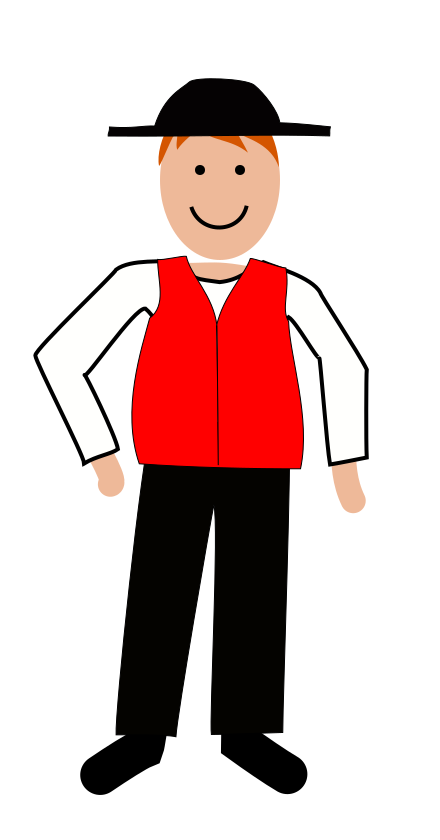
„Mi Mànn heißt Joseph.“
„Mon mari s'appelle Joseph.“
„Mein Mann heißt Joseph.“
„My husband is called Joseph.“
▫️
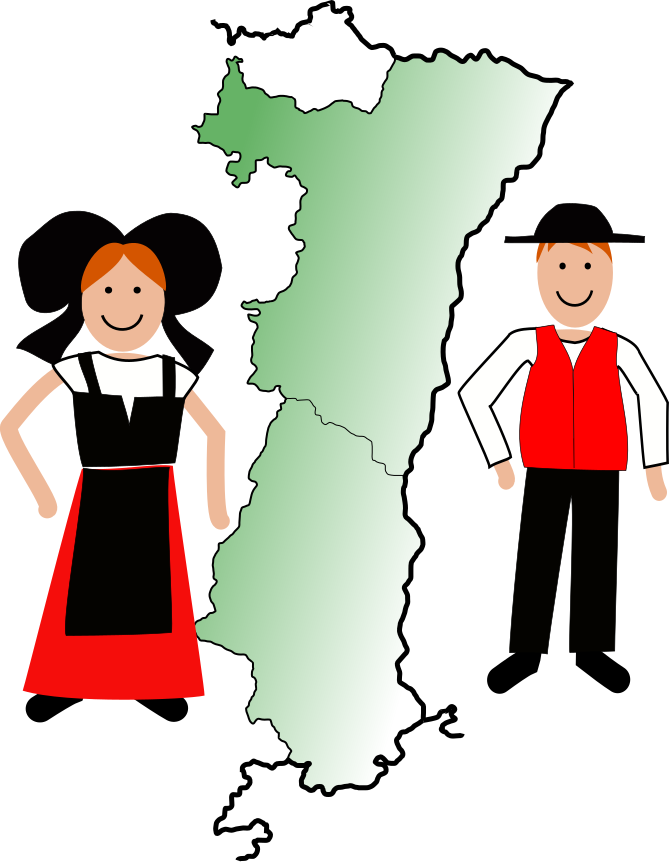
„Mìr sìn Elsasser un mìr wohna ìm Elsàss.“
„Nous sommes des Alsaciens et nous habitons en Alsace.“
„Wir sind Elsässern und wir wohnen im Elsass.“
„We are Alsatians and we live in Alsace.“
▫️
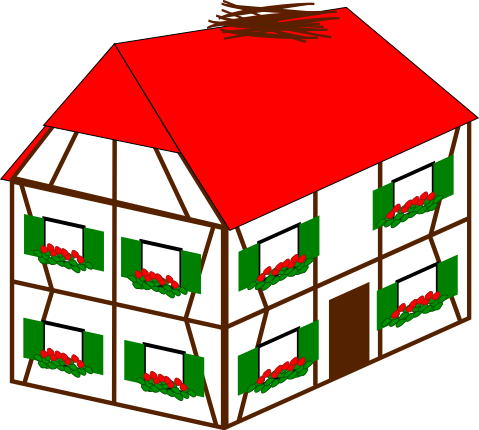
Dr Joseph un s Lisala han a scheen Hüss.
Joseph et Lisala ont une belle maison.
Joseph und Lisala haben ein schönes Haus.
Joseph and Lisala have a beautiful house.
Explication
Devant les prénoms, on met un article : dr Joseph (le Joseph), s Lisala (la Lisala). Joseph est au masculin : article dr.
Uf em Dàch ìsch a Storkanascht.
Sur le toit il y a un nid de cigognes.
Auf dem Dach ist ein Storchennest.
On the roof there is a stork nest.
Explication
Utilisation du datif.
Àn da Fanschter sìn Gerànium.
Aux fenêtres il y a des géraniums.
An den Fenstern sind Geranien.
At the windows there are geraniums.
▫️
Sa han a Hund, a Kàtz, a Kìnggala un Hiahner.
Ils ont un chien, un chat, un lapin et des poules.
Sie haben ein Hund, eine Katze, ein Kaninchen und Hühner.
They have a dog, a cat, a rabbit and chickens.
▫️
Dr Hund heißt Rex.
Le chien s'appelle Rex.
Der Hund heißt Rex.
The dog is called Rex.
▫️
Ar hiatet.
Il monte la garde.
Er hütet.
He guards.
▫️
D Kàtz heißt Mitzi.
Le chat s'appelle Mitzi.
Die Katze heißt Mitzi.
The cat is called Mitzi.
▫️
Sa fàngt Miis.
Il attrape des souris.
Sie fängt Mäuse.
It hunts mice.
▫️
Sa schloft vìel.
Il dort beaucoup.
Sie schläft viel.
It sleeps a lot.
▫️
S Kìnggala hàt kè Nàmma.
Le lapin n'a pas de nom.
Das Kaninchen hat keinen Namen.
The rabbit has no name.
▫️
's ìsch brüün.
Il est brun.
Es ist braun.
It is brown.
▫️
's wìrd amol (mìt Nüüdla) gassa.
Il sera (une fois) mangé avec des nouilles.
Es wird (einmal) mit Nudeln gegessen.
It will (once) be eaten with noodles.
▫️
D Hiahner lega Eier.
Les poules pondent des oeufs.
Die Hühner legen Eier.
The hens lay eggs.
▫️
Sa sìn hìnta ìm Gàrta.
Elles sont derrière dans le jardin.
Sie sind hinten im Garten.
They are behind in the garden.
 Afficher/masquer les traductions en français.
 Übersetzungen auf Deutsch anzeigen/verstcken.
 Show/hide english translation.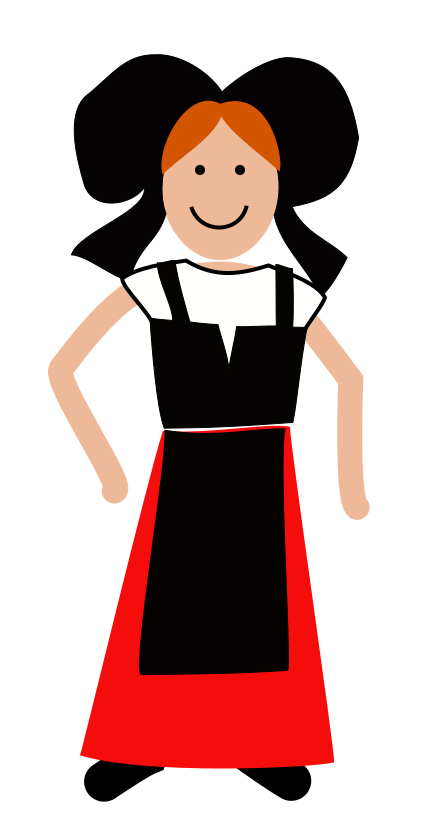
_8.svg)


